
The Growth Constraint Hiding in Your Bank Account | Insights from Brandon Smith
The Growth Constraint Hiding in Your Bank Account
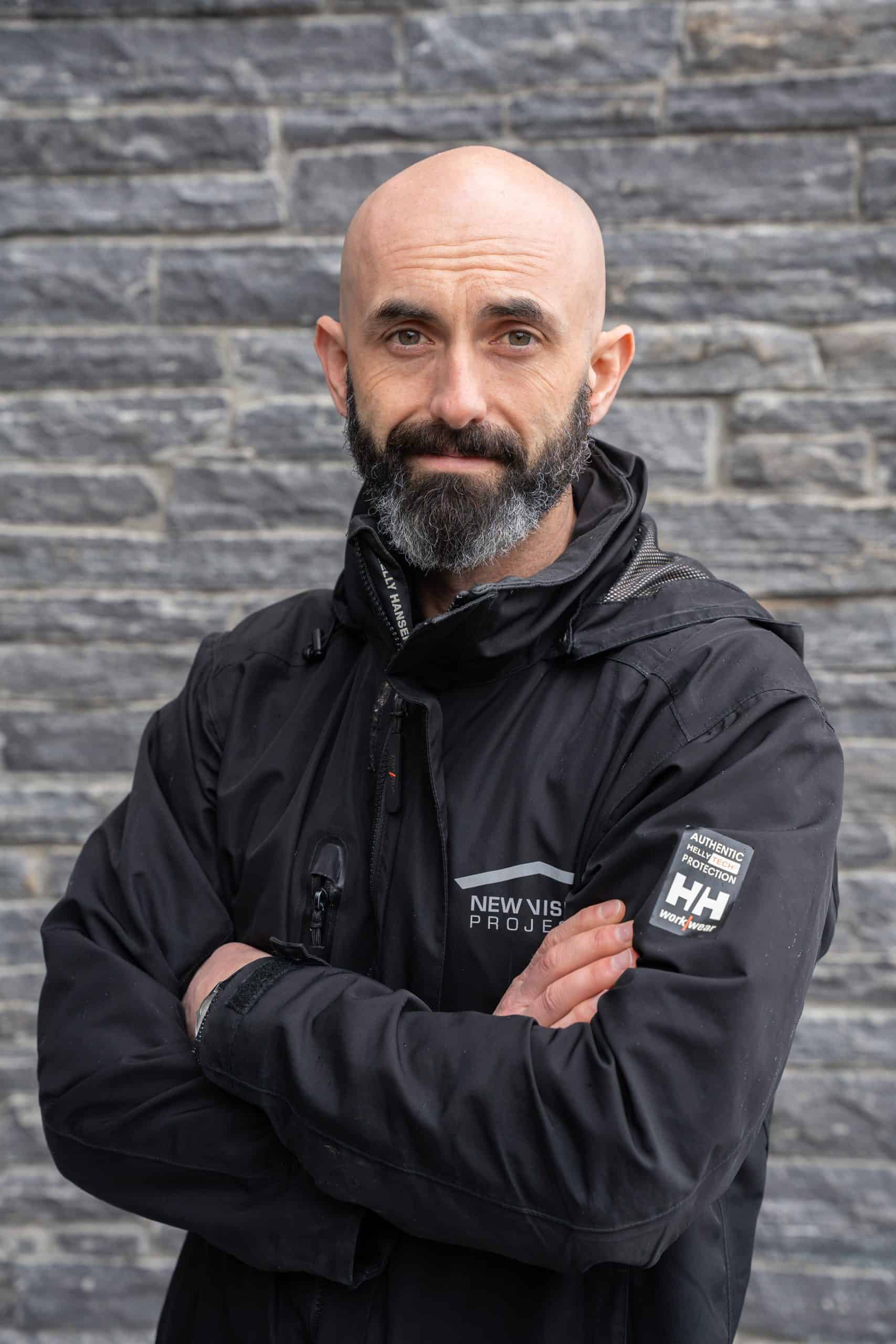
By IsleFlow with Insights from Brandon Smith
BRANDON SMITH WAS at Quiznos with his business partner when his debit card was declined. He didn’t have $9 for a sandwich, yet the sandwich was already through the oven. He had to borrow the money from his partner and told him, “This is never going to happen again.”
That was year one of New Vision Projects and was the kind of cash crisis every construction entrepreneur fears.
But Smith, CEO and co-founder, says there’s a more dangerous financial problem that hits later, when companies think they’ve made it past survival mode. It’s the construction company owner who looks at $300,000 in the bank and feels confident, not realizing they’re actually $100,000 underwater.
“They look in the bank, and they say, ‘Hey, we have three hundred grand there. That’s awesome! It looks like we’re doing well, and I have this feeling that things are okay,’” Smith explains. “But then they realize, actually, no, their payables really outweigh the cash in the bank or the receivables coming in. They’re really underwater a hundred grand.”
The delayed recognition is what makes this dangerous. “They don’t feel that pain and they don’t see it because there’s money in the bank that doesn’t belong to them.”
According to Smith, this isn’t a failure of intelligence or work ethic. It’s a problem built into how construction projects work. Without solving it, companies hit a ceiling, not because they lack capability or market opportunity, but because they can’t confidently answer whether they have the financial capacity to pursue what’s already in front of them.
Why Construction Creates Financial Blindness
Smith traces the problem to the fundamental structure of construction.
“What we do here in construction is fairly difficult because our projects go over the course of 6 months, 12 months, 18 months long,” he explains. “We don’t sell a widget for $20 that we’re buying for $5. We have many variables that arise.”
Smith points to project durations of 6 to 18 months as the core issue. A retail transaction completes in minutes. A construction project spans months or over a year, and variables compound across those extended timelines. Construction companies receive deposits upfront, incur costs throughout the project, and may not see final payments until months after substantial expenses. A deposit received in January funds materials purchased in March and labor through May. This timing mismatch creates what Smith calls a sense of financial health that can be completely disconnected from reality.
Business owners look at their bank balance and make decisions based on emotional confidence rather than understanding their actual financial position. This affects every business decision, from operational choices to the company’s ability to handle more complex work.
Smith specifically identifies deposits as “cash that needed to change hands” rather than profit. A $50,000 deposit sits in the bank account but is already committed to future project costs. It’s not available for new investments or opportunities. Yet it appears as cash on hand.
“I think that’s where a lot of business owners get into trouble,” Smith says.
The Blended Number Problem
The bank balance problem isn’t just about avoiding surprises. It’s about what decisions you can’t make confidently.
Should you take on that larger commercial project? Your bank says maybe. Your gut says probably. But you don’t actually know if you have the financial capacity or if you’d be stretching beyond what your current cash flow can handle.
Hiring that experienced project manager who’d open up new market opportunities? The salary looks affordable based on what’s in the bank, but you can’t be certain if that cash is genuinely available or already committed to projects underway.
Without separating actual profit from the total cash position, every growth decision becomes a gamble. You’re forced to be conservative even when opportunity exists, or aggressive when your position is weaker than it appears. Either way, you’re making a decision based on incomplete information.
The companies that break through growth plateaus aren’t necessarily taking bigger risks. They’re making decisions with better information.
From Survival Mode to Systematic Visibility
Smith’s own company progression shows when financial systems became necessary.
In year one, New Vision’s approach was purely reactive. “The way that we would get paid is essentially do work, then we’d sit down, go over all the receipts, and at the end of the day, we would pay ourselves whatever was left over,” Smith recalls. “Some months we made money. Some months, we didn’t know what we’d be paying ourselves. I didn’t think about taxes. It was all just survival mode at that point.”
The work matched the system: small renovations, fence installation, and deck construction. Really just trying to keep some cash coming in.
This is common for early-stage construction companies. The focus is on completing projects and keeping cash flowing. Smith describes the first two years as testing fundamental questions: “Do we have the drive and energy to keep this up?” and working through partnership dynamics. “How is this going to work? Do we trust that it’s going to keep going?”
Year three brought the shift. Smith met someone from a consulting firm who became his first coach, taking on only his second client ever. “That was when we started getting serious about systems.”
The timing is notable. Smith had proven the business model worked, but moving beyond small renovations and fences required different infrastructure. The first major system Smith implemented wasn’t financial reporting. It was an organizational structure.
“The biggest thing that we implemented first and foremost was actual roles within the company,” Smith explains. “Building out an organizational structure, who is responsible for what, who is accountable for what, what were the goals that we were both going to hit and what was going to happen if we weren’t committing to hitting those goals.”
This created a critical division: “What that did was it defined a line in the sand between who was focusing on production and who was focusing on the sales and marketing engine.”
From there came goal-setting. Smith describes building strategic plans spanning 10 years down to 90-day and 30-day increments. But the third system was the one most directly tied to growth capacity.
“Step number three was a bit more robust, but it involved developing regular communication cadence and a solid financial outlook on the business,” Smith says. This included Work in Progress (WIP) reporting, the system he’d identified as critical for distinguishing actual profit from deposits and understanding true cash flow timing across projects.
WIP reporting tracks each project’s costs, billings, and completion status independently, revealing whether cash in the bank represents deposits committed to future work, uncollected receivables, or actual profit available for use.
The system evolved with the company. “We developed a regular cadence for each of our leadership team and now each member of the company so that they have their own form of reporting and goal setting, and reviewing, which we go over as a team each week in the different departments.”
From sitting down with receipts at day’s end to structured weekly departmental reviews. Smith’s financial systems matured as New Vision’s work evolved. The company went on to complete projects that won Georgie Awards and HAVAN Ovation Awards, recognition that indicates work beyond the fence-and-deck scale where Smith started.
The progression suggests that systematic financial visibility became essential as the work grew more complex. Award-level projects require knowing which work is genuinely profitable and what capacity actually exists.
The Infrastructure Question
Smith’s company started with fences and small renovations. Sixteen years later, they’re completing award-winning projects. Somewhere between those two stages, receipt-based accounting stopped working.
The companies that plateau aren’t always limited by market opportunity or operational capability. Sometimes the constraint is simpler: they can’t confidently say whether they have the capacity to handle what’s already in front of them. The hesitation isn’t about ambition. It’s about information.
There’s a stage where working harder closes the gap, and another where you need better information, not just more effort.
The growth constraint isn’t always what you think it is. Sometimes it’s just that your financial system hasn’t kept pace with your work.
Brandon Smith is the CEO and co-founder of New Vision Projects, a construction firm based in British Columbia. Under his leadership, New Vision Projects has grown from small residential renovations to award-winning projects recognized with Georgie Awards and HAVAN Ovation Awards.
About the author:
Robert Puharich is the founder of IsleFlow Content Studio Inc. and author of Building Brilliance. He helps construction firms build the trust, authority, and credibility that makes them the first call, not just another bid.
Related reading: how we turn construction expertise into a published book.