
Internet Marketing for Contractors: Stand Out

Table of Contents
The construction industry has reached a digital tipping point. Today’s potential clients research contractors online before they ever pick up the phone, yet many construction companies still rely on outdated marketing approaches that leave them invisible in search results and indistinguishable from competitors.
This shift represents both a challenge and an opportunity. While 96% of people learn about local businesses online, most contractors approach digital marketing haphazardly by building basic websites, running occasional ads, and posting sporadically on social media without a cohesive strategy. The result? They get lost in a sea of similar-looking companies competing primarily on price.
However, construction companies, including contractors, that understand how to leverage an internet marketing strategy may discover they can move beyond price competition. Instead of fighting for the lowest bid, they can position themselves as the obvious choice for quality-conscious clients who value expertise and are willing to pay premium rates for proven competence.
The most successful contractors today aren’t just marketing their services—they’re marketing their expertise, experience, and unique value proposition. This approach has the potential to transform how potential clients perceive them, turning what was once a commodity business into a relationship-based service where authority and trust can command higher margins.
To implement this strategic approach effectively, construction companies need to understand what works best.
What Kind of Internet Marketing is Best for Contractors?
Construction companies should focus on five key internet marketing components that work together to build both visibility and authority.
• Local SEO optimization – 96% of people find local businesses online
• Professional website with mobile design – 97% check online presence before visiting
• Content marketing for authority building – garners 54% more leads than traditional methods
• Strategic PPC advertising – $2 return for every $1 spent in construction
• Social media for professional networking – especially LinkedIn for B2B connections
Building Your Digital Foundation
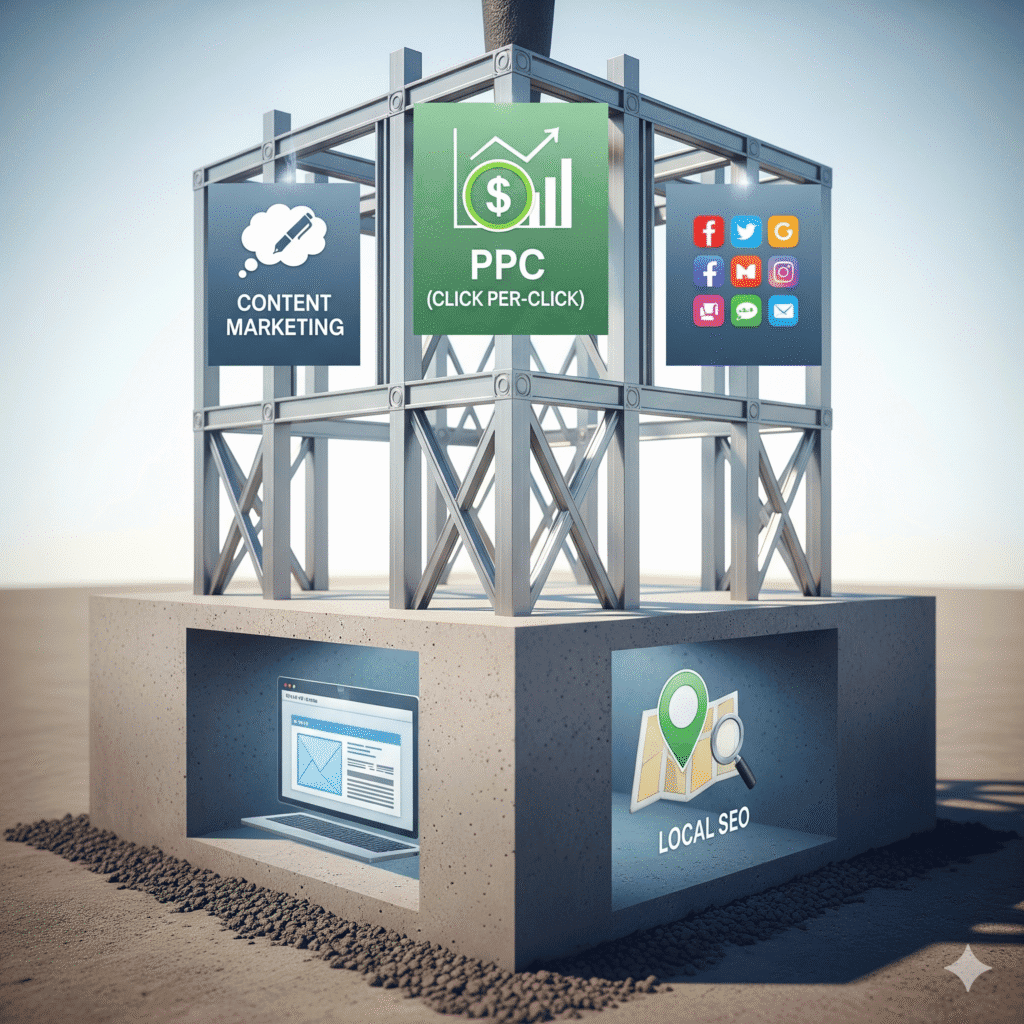
Before exploring advanced strategies, every construction company needs solid digital fundamentals. Think of these elements as the foundation of a building; without them properly in place, everything else becomes unstable and ineffective.
Creating a Professional Website That Converts
Your website serves as your digital headquarters and often provides the first impression potential clients have of your business. In an industry where safety, attention to detail, and project management skills are paramount, your website’s performance directly reflects your professional capabilities.
The statistics reveal just how critical this first impression has become: 88.5% of visitors leave websites due to slow loading speeds, and 73.1% cite poor mobile responsiveness as their reason for leaving. For contractors, this means potential clients can judge your attention to detail and project management capabilities based on how well your website functions.
Modern construction websites must go beyond simple project galleries. They need to tell a compelling story of expertise through carefully curated case studies, authentic client testimonials, and detailed service descriptions that demonstrate your understanding of complex construction challenges. Professional construction content writing can help articulate your expertise in ways that resonate with potential clients and search engines alike.
Essential Website Features:
- Mobile-responsive design
- Fast loading speeds
- Portfolio gallery with high-quality project photos
- Client testimonials and case studies
- Clear contact forms and phone numbers
- Service area maps and location information
- Licensing and insurance information display
Mastering SEO for Construction Companies
Once your website foundation is solid, the next priority becomes visibility. SEO for construction companies represents one of the most cost-effective long-term marketing investments you can make because when properly implemented, it can continue generating leads around the clock, even when you’re not actively managing campaigns.
The numbers support this approach: 53% of all website traffic comes from organic searches, and 49% of businesses say that organic search brings them the best marketing ROI. Unlike paid advertising that requires ongoing investment, a well-optimized website has the potential to continue attracting qualified prospects over time.
Local SEO for contractors becomes especially important because many construction businesses serve specific geographic areas. Your potential clients aren’t searching for “general contractor”—they’re searching for “commercial contractor Vancouver” or “kitchen remodeling contractor near me.” This local intent can create significant opportunities for contractors who understand how to optimize for these searches.
The key lies in creating content that addresses the real questions your potential clients ask while incorporating location-specific information that helps search engines understand your service area and expertise.
How Do I Do Local SEO?
Step-by-Step Local SEO for Contractors:
- Claim and optimize your Google Business Profile
- Add accurate business information
- Upload high-quality photos of completed projects
- Encourage and respond to customer reviews
- Ensure consistent Name, Address, Phone Number across directories
- Yelp, Angi, HomeAdvisor
- Local chamber of commerce listings
- Industry-specific directories
- Create location-specific content
- “Roofing Services in [City Name]”
- Local building code information
- Regional climate considerations
Optimizing for AI-Powered Search and Modern SEO
The SEO landscape is rapidly evolving with artificial intelligence reshaping how search engines understand and rank content. For contractors, this means that AI construction marketing strategies must focus on comprehensive, authoritative content rather than keyword manipulation tactics that worked in the past.
AI-powered search systems prioritize websites that demonstrate expertise, authority, and trustworthiness, the same factors that make contractors successful in their projects. Voice search queries often differ significantly from typed searches, with users asking complete questions like “What contractor should I hire for commercial renovation?” rather than searching “commercial renovation contractor.”
This shift requires construction companies to create content that answers specific questions potential clients actually ask, while ensuring their websites appear in featured snippets and provide direct answers to common construction-related questions. As AI technology continues advancing, successful contractors will differentiate themselves through comprehensive knowledge sharing that AI systems can recognize and recommend to users.
Strategic Pay-Per-Click (PPC) Advertising for Immediate Results
While SEO builds long-term visibility, PPC advertising offers contractors immediate visibility with precise targeting capabilities. This dual approach works particularly well for construction companies because it generates leads while your SEO efforts gain momentum.
The construction industry enjoys relatively favorable advertising costs compared to other competitive sectors. At $2.56 average cost-per-click for the construction industry, and with well-managed campaigns generating $2 for every $1 spent, PPC can provide immediate return on investment when executed strategically.
The secret to successful PPC for contractors lies in understanding intent. Not all clicks are created equal. Someone searching “emergency roof repair” represents far higher intent and urgency than someone searching “roofing ideas.” Your campaigns should prioritize keywords that indicate immediate project needs and genuine buying intent.
PPC Best Practices:
- High-intent keywords: “emergency repair,” “construction quote,” “licensed contractor”
- Geographic targeting: Focus on service areas within a reasonable travel distance
- Ad scheduling: Run ads during business hours when prospects can call
- Trust signals: Include licensing numbers, years in business, and insurance information
Moving Beyond Basic Tactics: Authority Building
While foundational marketing tactics generate leads, sustainable competitive advantage requires moving beyond basic visibility to establish genuine market authority. The statistics reveal an interesting pattern: 67.5% of contractors feel confident about securing new business over the next six months, with confidence highest among those who have established themselves as recognized experts rather than commoditized service providers.
This confidence appears to correlate with the protective power of authority. When potential clients view you as the expert in your field, they may become less likely to shop around for cheaper alternatives and more likely to trust your recommendations and pricing. Modern AI construction marketing strategies can help amplify this authority through strategic content distribution and search optimization.
Content Marketing That Builds Construction Authority
Content marketing generates 54% more leads than traditional marketing, but for contractors, the real value lies in the quality and intent of those leads. Strategic content creation establishes your expertise while attracting prospects who appreciate professional competence over lowest-bid pricing.
The most effective construction content addresses real concerns potential clients face when planning projects. Rather than creating generic content about “choosing a contractor,” develop specific resources like “How to Prepare Your Commercial Property for Major Renovation” or “Understanding Building Code Requirements for Multi-Story Construction.” This educational approach builds trust before the sales conversation even begins.
Case studies prove particularly powerful for construction companies because they showcase problem-solving capabilities and project management skills. However, effective case studies go beyond before-and-after photos to detail the challenges you’ve overcome, innovative solutions you’ve implemented, and measurable results you’ve delivered. For contractors looking to establish construction thought leadership, comprehensive case studies serve as foundational content that demonstrates expertise and builds industry credibility.

Strategic Social Media Marketing for Contractors
Social media marketing for contractors requires a different approach than consumer-focused businesses. When properly executed, social media marketing for contractors serves dual purposes: attracting potential clients and recruiting skilled workers in an increasingly competitive labor market.
The statistics highlight this dual opportunity: 63% of construction companies use social media and digital advertising to connect with young applicants, emphasizing the importance of maintaining a professional image that appeals to both audiences.
LinkedIn offers the strongest opportunities for B2B contractors to share industry insights, connect with architects and developers, and maintain visibility among decision-makers. Facebook works well for residential contractors to showcase projects and engage local communities, while Instagram provides an excellent platform for high-quality project photography and behind-the-scenes processes.
The key to success across all platforms involves providing value through your posts rather than simply broadcasting project photos. Share insights about industry trends, explain complex construction processes in simple terms, and highlight the problem-solving aspects of your work that demonstrate expertise.
Understanding Your Marketing Investment
Effective lead generation for contractors isn’t just about generating more inquiries, it’s about generating the right inquiries from prospects who understand and value professional expertise. This distinction becomes crucial when evaluating marketing ROI, particularly given the construction industry’s longer sales cycles and higher-value projects.
The industry’s financial scale creates tremendous opportunities for companies that master their marketing approach. Construction spending crossed US$2.15 trillion in 2024, indicating a solid market with substantial opportunities for well-positioned contractors. However, capturing your share requires strategic marketing investments that align with industry dynamics and client expectations.
Well-executed lead generation strategies have demonstrated impressive returns. These results come from understanding that a smaller number of qualified prospects interested in your specific services can outperform a larger volume of price-shopping prospects who view construction services as commodities.
These are some of the metrics you should look out for:
Key Marketing Metrics
• Average project value from different lead sources
• Conversion rate from inquiry to signed contract
• Cost per lead by marketing channel
• Return on ad spend (ROAS) for PPC campaigns
Advanced Strategies: Establishing Thought Leadership
The most successful contractors in today’s market don’t just complete projects, they shape industry conversations and influence how potential clients think about construction challenges. This level of influence requires moving beyond traditional marketing tactics to establish genuine thought leadership.
The statistics reveal the power of this approach: 68% of people say industry experts are considered thought leaders, and in the construction industry, this recognition translates directly into business advantages. Construction thought leaders may receive invitations to speak at industry events, get quoted in trade publications, and hear from potential clients who have followed their insights over time.
Construction thought leadership can take many forms, from writing detailed analyses of new building technologies to sharing insights about regulatory changes affecting the industry. The key lies in consistency and authenticity; your perspectives should reflect genuine experience and offer valuable insights that help others navigate complex challenges. For contractors ready to take this step, exploring comprehensive content strategies can provide the foundation for sustained thought leadership efforts.
Industry trends provide excellent thought leadership opportunities. With a 30% increase in construction projects incorporating renewable energy solutions being predicted, compared to previous years, contractors with experience in sustainable building practices can position themselves as experts in this growing market segment.
Professional recognition can follow thought leadership efforts. Speaking opportunities at trade shows, invitations to serve on industry committees, and requests for expert commentary can reinforce your market position while creating additional networking opportunities with other industry leaders and potential high-value clients, and also providing content for your continued internet marketing strategy.
Taking Action: Your Strategic Next Steps
Internet marketing for contractors has evolved far beyond basic websites and occasional advertising. Today’s most successful construction companies use comprehensive digital strategies to establish market authority, attract qualified prospects, and command premium pricing based on demonstrated expertise rather than competing solely on price.
The foundation remains critically important: professional websites, effective SEO, and targeted advertising generate essential visibility and leads. However, sustainable competitive advantage comes from moving beyond these basics to build genuine authority through strategic content creation, thought leadership development, and professional relationship building.
The contractors who will thrive in an increasingly competitive market are those who position themselves as experts rather than vendors, educators rather than bidders, and strategic partners rather than interchangeable service providers. This transformation requires consistent effort and strategic thinking, but the rewards include better clients, higher profit margins, and reduced dependence on price-based competition.
Your immediate priorities should include auditing your current website for mobile responsiveness and loading speed, claiming and optimizing your Google Business Profile, and setting up basic tracking for website traffic and lead sources. These foundational steps create the platform for more sophisticated marketing efforts as your strategy develops.
Long-term success requires building thought leadership through industry content creation, developing comprehensive case studies that showcase your problem-solving capabilities, and creating strategic partnerships with architects, suppliers, and other industry professionals who can provide referrals and collaborative opportunities.
Internet marketing for contractors will continue evolving as new technologies and platforms emerge, but the fundamental principles of providing genuine value, building authentic authority, and focusing on attracting the right clients rather than the most clients remain constant.
For construction professionals interested in establishing authority through comprehensive content creation and professional book publishing, IsleFlow Content Studio specializes in helping construction leaders transform their expertise into powerful business assets that differentiate their companies and drive sustainable growth. If you’ve never considered writing a book, this is something that we’ll help you with. The stats don’t lie; it will help your business.
Frequently Asked Questions (FAQ) About Internet Marketing for Contractors
Q. How much should contractors spend on digital marketing?
Most construction companies allocate 2-8% of revenue to marketing, with the specific amount depending on their growth stage and market position. According to industry research, construction companies spend about 3% of revenue on digital marketing, while the Small Business Administration recommends 7-8% for companies under $5 million in revenue. Specialty trade companies may invest 8-12% of revenue to establish market presence.
The key is viewing marketing as an investment in business growth rather than an expense. Companies that consistently invest in marketing during good times are better positioned to maintain revenue during economic downturns and capture market share when competitors reduce their marketing efforts.
Q. What’s the best marketing strategy for new contractors and construction businesses?
Internet marketing for contractors requires the start of a journey, and success can require building credibility and establishing immediate visibility before investing in advanced strategies. The priority order may include: professional website with local SEO optimization for foundation requirements, Google Business Profile optimization for immediate local visibility, targeted PPC campaigns for fast lead generation while SEO builds momentum, social media presence for credibility and networking, and content marketing for long-term authority building.
This progressive approach ensures you have a solid foundation before building more sophisticated marketing capabilities, while also generating leads to sustain business growth during the development process.
Q. How long does it take to see results in my marketing?
Understanding realistic timelines helps contractors maintain appropriate expectations and avoid abandoning strategies before they produce results. Based on industry experience, PPC advertising can generate good leads within 2-3 months maybe less, local SEO may show significant ranking improvements in 3-6 months, content marketing can build authority over 6-12 months, and comprehensive digital presence development often requires 6-18 months for full results.
The most successful companies combine short-term tactics like PPC with long-term strategies like SEO and content marketing to maintain consistent lead flow while building sustainable competitive advantages.
Q. Should contractors hire an agency or handle marketing in-house?
This decision depends on your available time, expertise, and growth objectives. Consider an agency when you lack time for consistent marketing efforts, your team lacks digital marketing expertise, you want faster, proven results, or you prefer to focus on core construction work.
Consider handling marketing in-house when you have dedicated time for marketing activities, want complete control over messaging, have team members with marketing skills, or budget constraints require slower, gradual growth.
Many successful contractors start with agencies to establish their foundation and generate initial momentum, then gradually build internal capabilities as their business grows and marketing needs become more sophisticated.
Related reading: construction content marketing that wins contracts, plus construction case studies that win commercial bids and the commercial authority stack framework.
Ready to establish your authority and differentiate your construction business? At IsleFlow Content Studio Inc., we work with construction executives to publish professional books that differentiate you from competitors, command premium pricing, and create lasting industry authority. Our proven publishing process is designed for busy construction professionals who want to become published authors without disrupting their business operations.
We guarantee your satisfaction—if you’re not completely satisfied with your book, we’ll work with you until it meets your expectations.
About the author:
Robert Puharich is the founder of IsleFlow Content Studio Inc. and author of Building Brilliance. He helps construction firms build the trust, authority, and credibility that makes them the first call, not just another bid.