
Behind the Build | Insights from Babak Nikraftar
Behind The Build
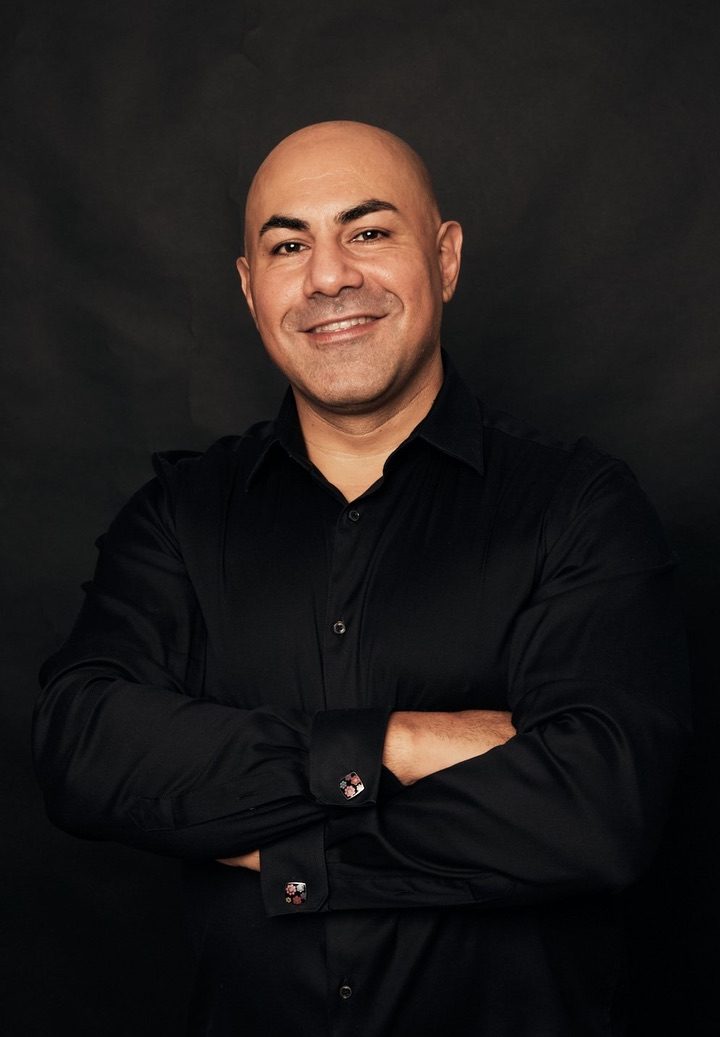
By IsleFlow with Insights from Babak Nikraftar
BABAK NIKRAFTAR’S WIFE hates going places with him. Walk into any building, any space, and he is already cataloging it. What’s off, what was done wrong, where someone made a decision during the build stage that showed up as a problem at finishing. Over 1,100 units and more than a decade on the building side, that pattern recognition became involuntary. He can’t turn it off.
The instinct is simple: you cannot fix what you cannot see. What took longer to learn was that the same principle applies to a business. When Babak eventually turned that same diagnostic eye on Forte Projects (and eventually Condoworks Transformations), what he found, and what he couldn’t see, changed the direction of everything.
What the Remediation Work Taught Him
Nikraftar’s first two years in the construction industry were spent in leaky condo remediation, not actually building, but taking homes apart. Opening walls, tracing mold and water damage back to decisions made years earlier by tradespeople who never saw the finished product. Unglamorous work, but also one of the most instructive positions in construction: seeing the end product at its failure stage.
The tradespeople weren’t necessarily careless; they just couldn’t see the bigger picture and how their work would compound. A framing error of one degree is invisible at the rough-in stage. By the time drywall, flooring, and baseboards are in, that same degree has multiplied into something expensive and visible. “That one degree that looks like nothing at the framing stage actually looks much worse in the finished product,” Babak says, “and costs a lot more money to fix.” The people who caused the problem never saw its consequence. The people fixing it dealt with nothing else.
A customer service technician role followed. Babak’s job was to conduct deficiency walkthroughs with new homeowners at move-in, which included handing over keys while simultaneously learning exactly what clients noticed, what concerned them, and what they remembered when the project was done. Most people in construction never access that perspective. Nikraftar used it to reverse-engineer quality assurance back into the build from the client’s point of view. “I had the opportunity to hand over the keys to a car in a showroom, see what the issues were with both the aesthetics and the engine, and then go back to the factory and tell them what needed to be fixed.”
Then, a decade on the building side. More than 1,100 units. Enough repetition to walk into a space and already know where it went wrong. He also admires the beauty of well-executed work.
By the time he founded Forte Projects and built out Condoworks as its condo-renovation division, Nikraftar had spent years learning to see what others missed on job sites. The harder lesson was accepting that a growing business has its own set of blind spots, and failing to see them carries the same consequences.
When the Bank Says No
The warning signs, when they came, were familiar in structure if not in form. Revenue was climbing. The business felt busy. But Nikraftar didn’t have a clear picture of what any of it actually meant.
“You get caught in revenue vanity,” he says. “You think, ‘We’re making this much money,’ but you still have to pay your suppliers and your overhead.” He was looking at the business the way a crew may look at their work, from the inside, without the full picture. The gap between what was coming in and what the business was actually worth became most evident when he went to the bank for a loan or line of credit and was turned down. That is when the learning accelerated.
His response was structural. He hired a full-time in-house bookkeeper. Not an outsourced service, not a more careful personal review of the numbers, but a dedicated person whose entire professional focus was owning that function. Invoices now flow through a coordinator and project manager, get confirmed at that level, and only reach Nikraftar for final payment approval, a task that he is soon handing off to his head of accounting. Clean chain of custody. No administrative drag at the owner level. “The investment pays you back within six to eight months,” he says, “and then it frees you up to grow to the next level.”
Internal Operations Versus External Perceptions
That same commitment to seeing the business clearly extended outward. Nikraftar engaged a market research firm to conduct a structured evaluation, assessing operations, then going directly to clients and designers for feedback. The findings were candid. People were confused about which brand to contact, the difference between Forte Projects and Condoworks, who handled what, and where to direct their questions. Problems he hadn’t been able to see from inside the business were obvious the moment someone looked in from the outside.
That evaluation also clarified the brand structure. Condoworks Transformations serves condo owners with renovation budgets, while Forte Projects handles new builds and major renovations, and a client demographic with entirely different expectations. Two focused brands serving two distinct audiences makes sense. Running them as two completely separate legal entities, including separate bank accounts, insurance, and vendor contracts, was an administrative burden with no return. Nikraftar amalgamated Condoworks into Forte formally in late 2023, positioning it as a division under the larger umbrella. The market sees two brands. The business runs one set of systems.
The Hiring Problem He Kept Repeating
Financial visibility solved one blind spot. The next one was sitting across the desk at every job interview.
Early in the company’s growth, Nikraftar made hires based on gut feel. Someone seemed personable and came across well in conversation, with a resume to back it up. Months later, it became clear they were underperforming and expensive. He overpaid, and he waited too long. Then it happened again. Gut feel, it turns out, is not a reliable picture of who someone actually is. It’s an impression, and impressions are easy to manage in a 45-minute interview.
Working through the Entrepreneurial Operating System (EOS) framework, Nikraftar brought on an external integrator, whose role was specifically focused on building operational structure. Together, they designed a hiring process built around what you can verify rather than what you can sense. The sequence matters.
Organizational structure came first. Every position mapped, every role defined, every job description written with specificity before a single posting went live. The specification precedes the search. From there, personality and skill requirements were defined per role, not generically, but specifically for how each position functions within Forte’s operation and culture. Those requirements were embedded directly into job postings through an assessment platform. The first gate is automated: candidates who don’t meet the threshold receive a polite rejection without any human time spent. Those who qualify move forward to a short video submission before any live interview is scheduled, a step that surfaces communication style, self-awareness, and cultural fit before a meeting ever takes place.
A large applicant pool distills to a small group of well-vetted finalists. The hiring decision is made based on the strongest candidates available, not the most convenient ones. “We’d rather take the time, run the processes, and hire the right person,” Nikraftar says.
The economics are blunt. One avoided mis-hire at a senior salary pays for the entire system. At the management level, the stakes sharpen further. A smaller pool, higher salaries, and higher consequences. A rigorous process creates an accurate picture of a candidate. Gut feel never did.
Red, Blue, Black
With clearer sight lines into the business and a hiring process that worked, one blind spot remained. What Nikraftar himself was doing with his time and whether that aligned with what the next phase of the company needed from him.
He uses a three-category framework developed with his coach. Red tasks are administrative work that don’t generate revenue, such as compliance, licensing, and paperwork. Necessary but not owner-dependent once the right systems are in place. Blue tasks are direct revenue-generating activity that require his personal involvement. Client relationships, contract conversations, and the engagements where his presence moves things forward. Black tasks are visionary work. Designing what the business will be in eight months to two or more years from now. New markets. Structural decisions. Long-range planning.
When Nikraftar started working with his coach, nearly all his time sat in Red and Blue. Almost nothing in Black. The consequence wasn’t dramatic, and the business kept running. But an owner buried in today’s work cannot see what the business needs to become. That’s the version of the one-degree framing error that shows up in company leadership. It’s invisible in the moment, yet expensive by the time you notice it.
That has shifted. When the right people own the right functions, the owner’s time is no longer consumed by the business’s present. It becomes available for the business’s future. “I’m always thinking at least one to three years ahead, depending on the size of what I’m trying to build,” Nikraftar says. He is actively working on initiatives that won’t be client-facing for months. Geographic expansion into other Canadian markets, specifically on the condo side, is already on the longer-range plan. The business he runs today and the business he is designing for two years from now are parallel tracks, both deliberate.
The Ceiling Is Movable
The systems Babak Nikraftar has built, financial, operational, people, and time, are not independent initiatives. Each one solved a specific form of blindness: not seeing the business’s true financial position, not seeing who a candidate really was, and not seeing far enough ahead to build toward something. Remove enough of those blind spots and the ceiling rises. Leave them in place, and the business stays exactly where it is, no matter how hard anyone works.
His view on what drives all of it comes back to something personal. You don’t advance the company until you advance yourself. That capacity is developed deliberately, through reading, coaching, and mentorship. Personal growth is one of Forte’s and Condoworks stated core values, extended to every team member. “Always be like a tree, always be growing,” he states.
Passion gets you started. Clarity determines how far you go.
Babak Nikraftar is the founder of Condoworks Transformations and Forte Projects, Vancouver-based construction and renovation companies known for high-end condo transformations and custom residential projects.
Starting his career in leaky condo remediation and later overseeing more than 1,100 new residential unit builds, Babak developed a systems-driven approach focused on quality, operational clarity, and long-term growth. Today, he is recognized for combining construction expertise with entrepreneurial leadership, building scalable processes, strong company culture, and a client-first philosophy that challenges the traditional construction industry model by taking a hospitality-driven approach.
About the author:
Robert Puharich is the founder of IsleFlow Content Studio and author of Building Brilliance. He helps construction firms build the trust, authority, and credibility that makes them the first call, not just another bid.
Related reading: how we turn construction expertise into a published book.